
Your Cavendish memories


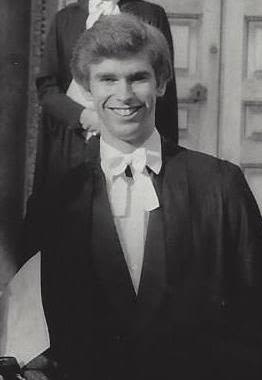
Nigel Allsopp PhD graduation, Cambridge, summer 1980.
Nigel Allsopp PhD graduation, Cambridge, summer 1980.

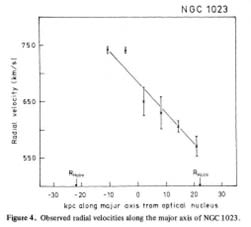
Observed radioal velocities along the major axis of NGC 1023
Observed radioal velocities along the major axis of NGC 1023
Observed radioal velocities along the major axis of NGC 1023
Observed radioal velocities along the major axis of NGC 1023
NGC 1023
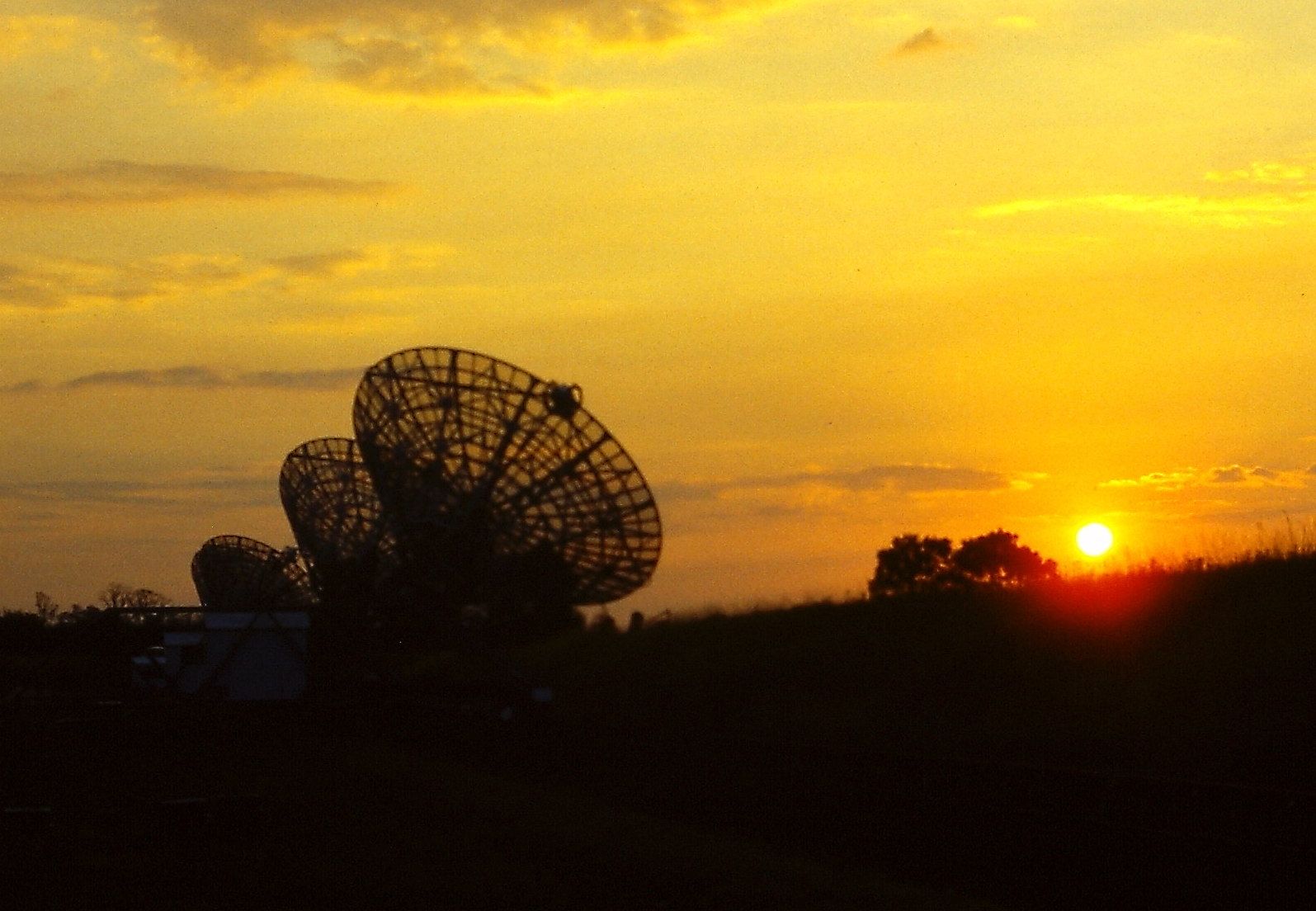
One of my first research projects during my time at the Radio Astronomy Group at the Cavendish Laboratory (1975–78) was to map neutral hydrogen in the NGC 1023 galaxy, under the supervision of John Baldwin, using the Half-Mile Radio Telescope at Lord’s Bridge. We were allowed to use the old Department moped to get there. I did the mapping, but was disappointed to find that the signal was too weak to show any rotation of the galaxy. So I dumped the deck of computer cards on the floor in my office and moved on to the next project.
Quite some time later, a lady working on computer software* showed me a programme she had developed to display galaxy rotation even with weak radio signals. I grabbed my deck of punched cards from off the floor, ran the data through her programme, and got NGC 1023 to rotate! Nobody had done this before for such a type of galaxy (S0, intermediate between ellipticals and spirals). Shortly afterwards, out came a paper with the results (Allsopp, N.J. 1979. Mon. Not. R. astr. Soc., 187, 537)
Ever since then, whenever I see 10:23 on the clock, I think of ‘my galaxy’ that I ‘managed to rotate’!
Nigel Allsopp
(Radio Astronomy group, 1975-78)
*A note from the Editors: We are investigating who the person working on computer software was and will provide an update in the next edition of CavMag.