
News in brief


Funding News
Advancing quantum science combined with chemistry
A team of experts in quantum science and chemistry, led by Rakesh Arul, Research Fellow at the Cavendish Laboratory, has been awarded a Research and Innovation’s Engineering and Physical Sciences Research Council (EPSRC) grant to show evidence of quantum entanglement in molecules.
The project, titled Nanoscale Spin Entanglement and Chemistry (NanoSPINEC), has secured £500,000 for the Cavendish Laboratory and $600,000 for the University of California San Diego (UCSD) as part of a three-year collaborative partnership.
NanoSPINEC aims to control quantum behaviour in single molecules at room temperature using tiny light-based devices called nanocavities. These will allow the researchers to manipulate electron spins, the fundamental units of quantum information.
Funding boost to revolutionise optical metamaterials
Cambridge researchers, led by Jeremy Baumberg, Ulrich Keyser, and Anton Souslov from the Cavendish Laboratory, together with Michael de Volder from the Department of Engineering, have secured funding to create materials with radically new optical and mechanical properties, that can be
produced at scale and low cost.
The new funding, comprising of a UK metamaterials hub grant and a follow-up funding grant led by the University of Cambridge, will allow the multi-disciplinary team to push the boundaries of what is possible with metamaterials.
Optical metamaterials are special materials designed to control light waves in ways that natural materials cannot. These materials can bend, absorb, or reflect light in unusual ways, making them useful for a variety of applications.
With the Reconfigurable Nano-Opto-Mechanical Metamaterials (RENOMM) project, researchers aim to create metamaterials using nanoscale building blocks that can be self-assembled and disassembled for reuse at the end of their life.
Awards and recognition

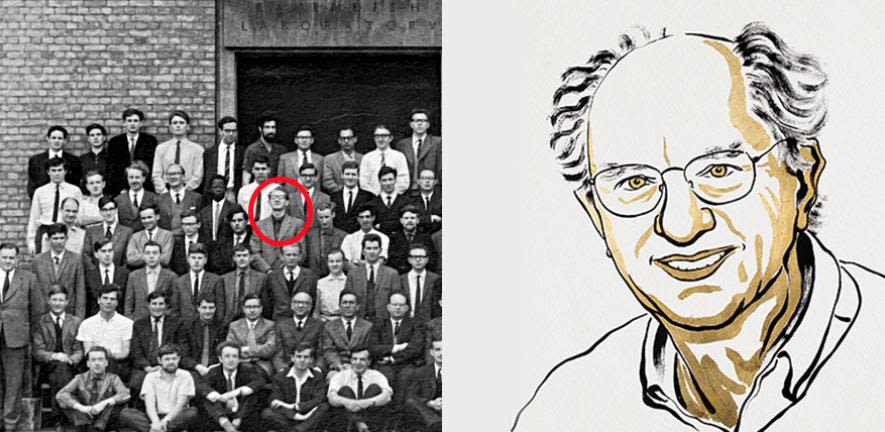
(left) John Clarke (circled) as a PhD student at the Cavendish Laboratory; (right) Illustration of John Clarke. Credit: Nobel Prize Outreach, Illustration: Niklas Elmehed.
(left) John Clarke (circled) as a PhD student at the Cavendish Laboratory; (right) Illustration of John Clarke. Credit: Nobel Prize Outreach, Illustration: Niklas Elmehed.
Cavendish alumnus John Clarke awarded 2025 Nobel Prize in physics
John Clarke has been awarded the 2025 Nobel Prize in Physics, jointly with Michel H. Devoret and John M. Martinis, for revealing quantum physics in action. Born in Cambridge, Clarke studied Natural Sciences at Christ’s College and completed his PhD at Darwin College in 1968, conducting research at the Cavendish Laboratory.
His pioneering work focused on superconducting quantum interference devices (SQUIDs), ultrasensitive detectors of magnetic flux. Clarke’s PhD research at the Cavendish demonstrated the operational principle of the
superconductor-normal-superconductor (SNS) Josephson Junction, a key component of modern superconducting qubits. This foundational work paved the way for today’s quantum technologies, developed further by Devoret and Martinis. Clarke, Devoret and Martinis conducted experiments with an electrical circuit in which they demonstrated both quantum mechanical tunnelling and quantised energy levels in a system big enough to be held in the hand.
John Clarke is the 126th affiliate of the University of Cambridge and the 36th of the Cavendish Laboratory, to be awarded the Nobel Prize.

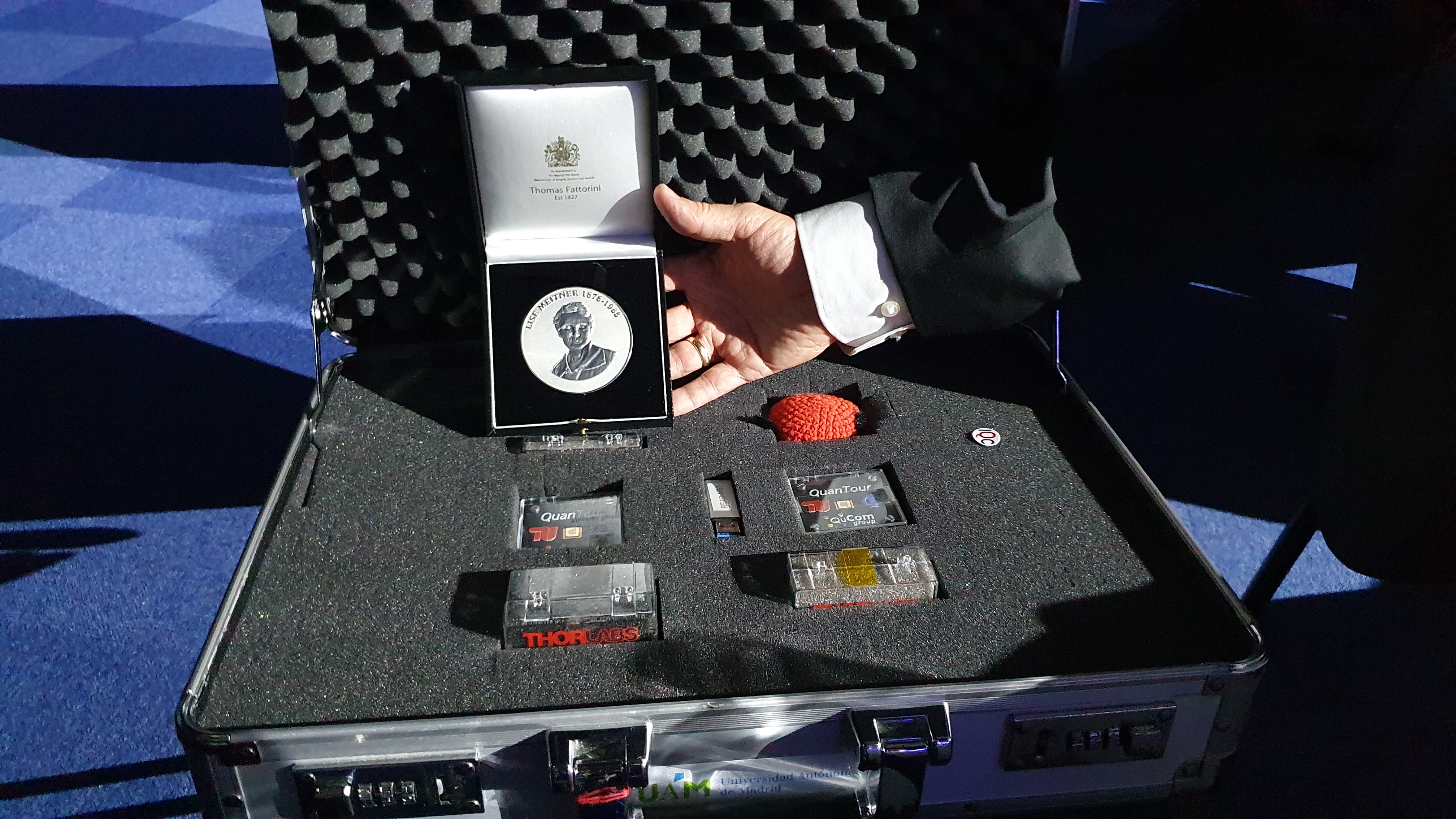
The QuanTour light source and the IOP Lise Meitner medal reunited. Credit: Doris Reiter.
The QuanTour light source and the IOP Lise Meitner medal reunited. Credit: Doris Reiter.
Institute of Physics award for International quantum initiative QuanTour
QuanTour, a collaborative initiative featuring a travelling quantum light source hosted by Cambridge and 11 other institutions across Europe, has been awarded the 2025 Institute of Physics (IOP) Lise Meitner Medal and Prize for innovative public engagement across the UK and Europe, offering live insights into the work of physicists.
At the heart of the QuanTour outreach project, conceived by Doris Reiter (TU Dortmund, Germany) and Tobias Heindel (University of Münster, Germany), is a chip containing a quantum dot light source, a cutting-edge device capable of emitting single photons – fundamental particles of light – on demand and in very fast succession. Travelling across 12 laboratories in 12 European countries over 12 months, throughout the International Year of Quantum 2025, the source arrived in Cambridge in October 2024, halfway through its journey, where it was hosted by the Cavendish Laboratory in Mete Atatüre’s Quantum Optical Materials and Systems group. The project was closely supervised by Christian Schimpf and Yusuf Karli, whose dedication played a crucial role in QuanTour’s overall success and the Cavendish’s specific contribution.
Other IOP award winners this year included our former Head of Department Peter Littlewood, who received the Richard Glazebrook Medal and Prize for leading international research institutions and Cavendish Affiliate Sam Stranks, who was awarded the Nevill Mott Medal and Prize for outstanding contributions to the understanding and development of emerging semiconductor materials.
Sarah Bohndiek named one of The Photonics100 2026
Sarah Bohndiek has been recognised as one of The Photonics100 2026, celebrating the 100 most innovative people shaping the future of photonics worldwide.
Her pioneering work in biomedical imaging and optical technologies has made a significant impact on both research and real-world applications, earning her a place among this year’s global honourees.
The Photonics100, published by Electro Optics, highlights leaders driving innovation across advanced lasers, quantum technologies, integrated photonics, optical communications, and novel sensing. Against a backdrop of global disruption, shifting supply chains, and rising demand for AI-driven
solutions, this year’s list showcases the ingenuity and resilience of the field.
The UK takes the lead in 2026 with 21 honourees, reflecting the strength of its £18.5bn photonics sector. Many congratulations to Sarah.
Cavendish astrophysicists win prestigious Student Prizes
Many congratulations to Ignas Juodžbalis, PhD student working under Roberto Maiolino, and Dávid Puskás, PhD student in Sandro Tacchella’s group, for being awarded the prestigious Monthly Notices of the Royal Astronomical Society (MNRAS) Student Prize 2025.
This recognition highlights their papers as the best submitted to the journal in a given 12-month period with a student as the corresponding author. Ignas was recognised for his paper that studies the components of a JWST-bright but X-ray weak active galactic nuclei (AGN).
David received this award for his first ever first-author paper which explores a wide cosmic epoch offered by JWST data in order to constrain one of the major mechanisms to grow galaxies.

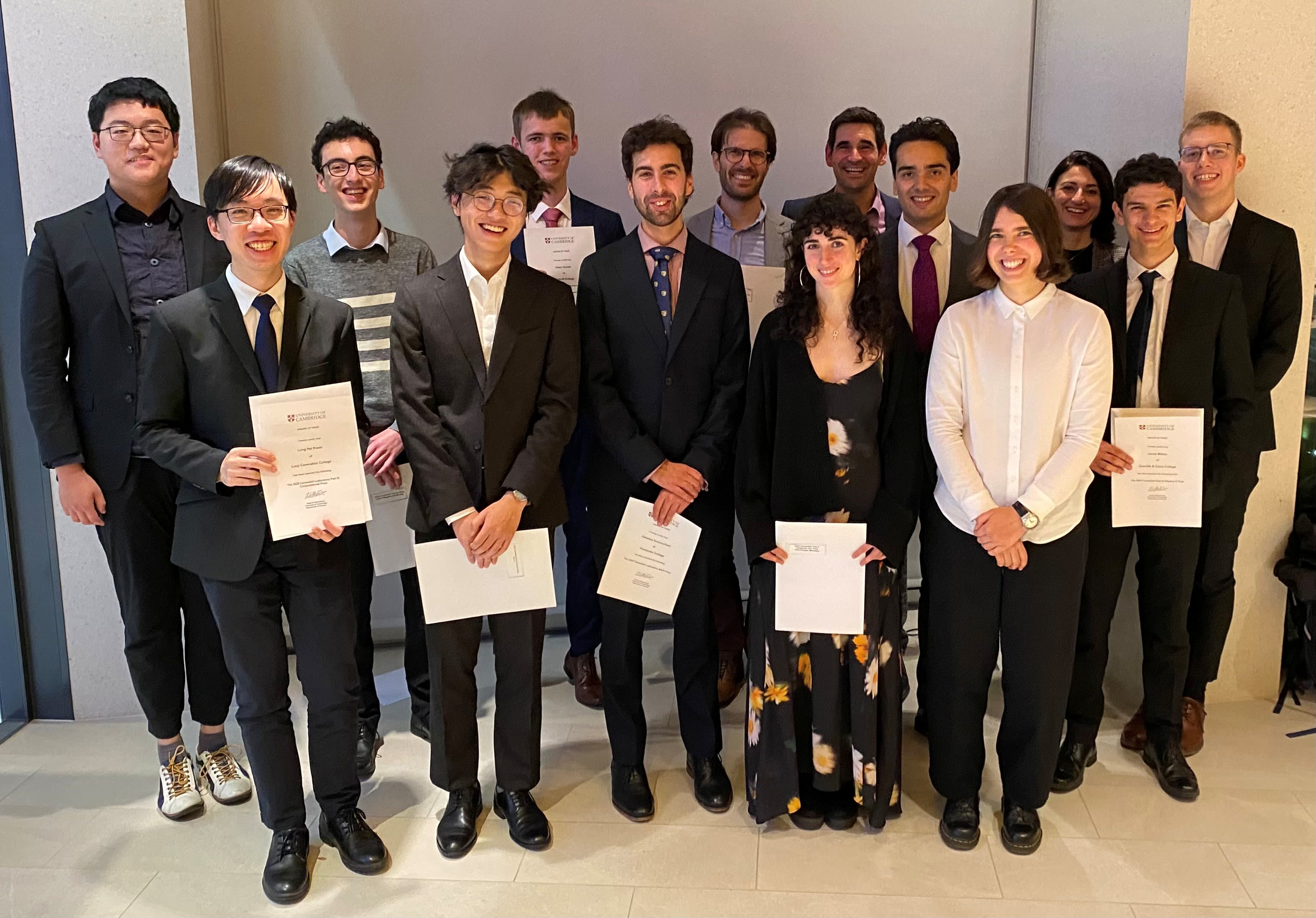
Prize Winners 2025, from left to right, Joshua Wu, Long Hei Kwan, Yotam Margoninski Morrag, Max Lu, Owen Hunter, Zebedee Summerfield, Dr Anton Souslov, Alba Burgos Mondejar, Prof Ulrich Schneider, Louis Kirkpatrick, Francesca Di Cecio, Prof Chiara Ciccarelli, Jacob Mittoo, Eero Jaaskelainen.
Prize Winners 2025, from left to right, Joshua Wu, Long Hei Kwan, Yotam Margoninski Morrag, Max Lu, Owen Hunter, Zebedee Summerfield, Dr Anton Souslov, Alba Burgos Mondejar, Prof Ulrich Schneider, Louis Kirkpatrick, Francesca Di Cecio, Prof Chiara Ciccarelli, Jacob Mittoo, Eero Jaaskelainen.
Undergraduate Prize Winners’ Dinner 2025
We were delighted to host the Cavendish Laboratory Undergraduate Prize Winners’ Dinner 2025 in October. This annual event, held for the first time at the Ray Dolby Centre, served to formerly acknowledge the achievements of our most exceptional students. On this occasion, Ulrich Schneider, Director of Undergraduate Education, presented prize certificates to each of the winners.
These annual awards recognise outstanding achievement in physics across all undergraduate years, from excellence in
theory, experiment, and computation to exceptional research reviews and overall academic performance. For the full list of
2025 winners, visit phy.cam.ac.uk/news/annual-prizewinnersdinner-2025/

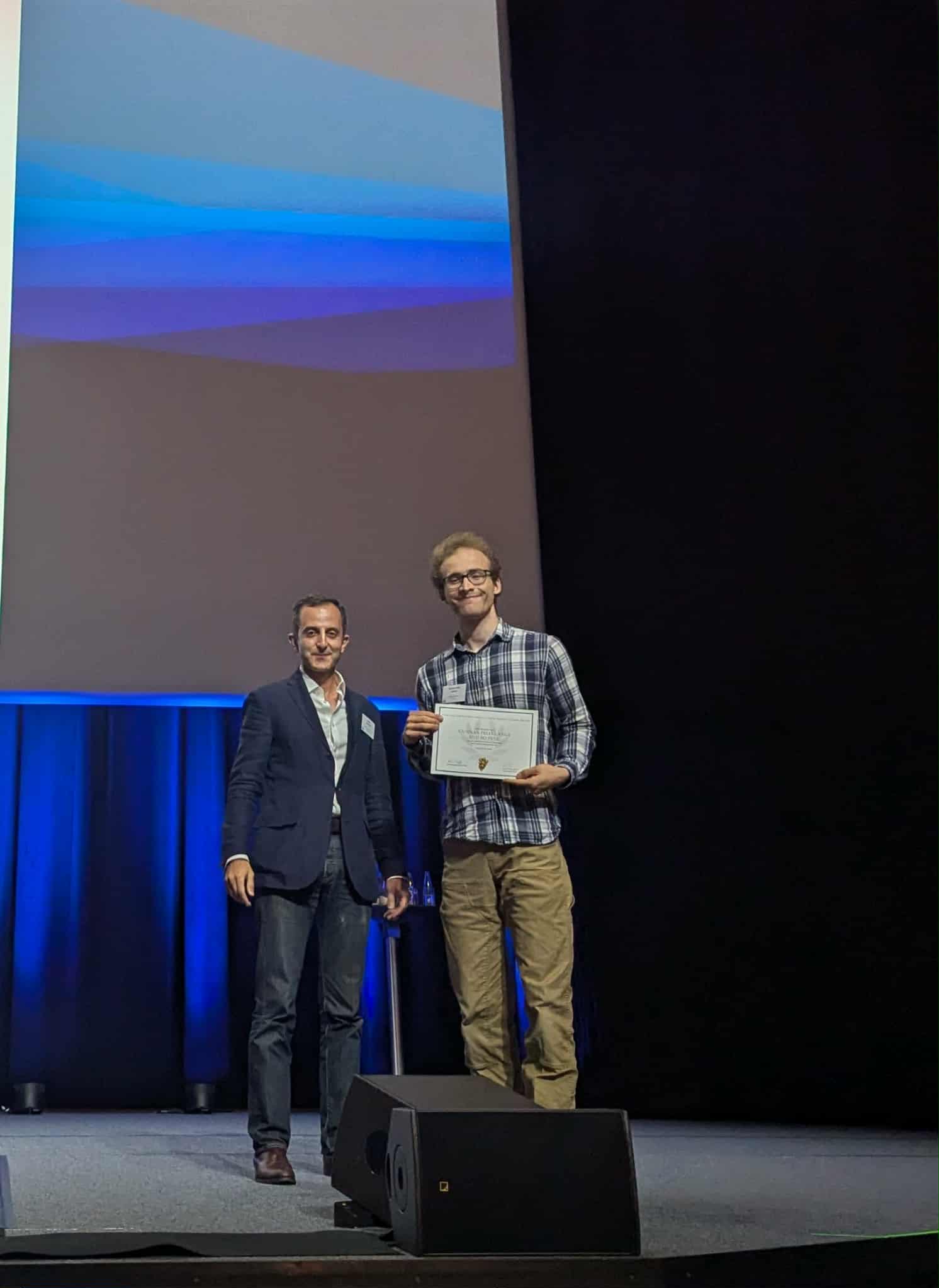
Gunnar Felix Lange receiving the award in Lausanne.
Gunnar Felix Lange receiving the award in Lausanne.
TCM researchers win inaugural Psi-k CECI award for collaborative research excellence
Bo Peng from the Theory of Condensed Matter group (TCM) and Gunnar Felix Lange (TCM alumnus) have been awarded the inaugural Psi-k Collaborating Early-Career Investigators (CECI) Award at the Psi-k 2025
Conference in Lausanne. Psi-k is a Europe-based, worldwide network of researchers working on the advancement of firstprinciples computational materials science.
The award celebrates the power of collaboration in advancing science, where creativity grows through dialogue, exchange of ideas, and teamwork.
Their project 'New concepts of topology from theory to modelling and applications' was chosen as the winning entry from five finalists, earning them the €2,000 prize.
Department news

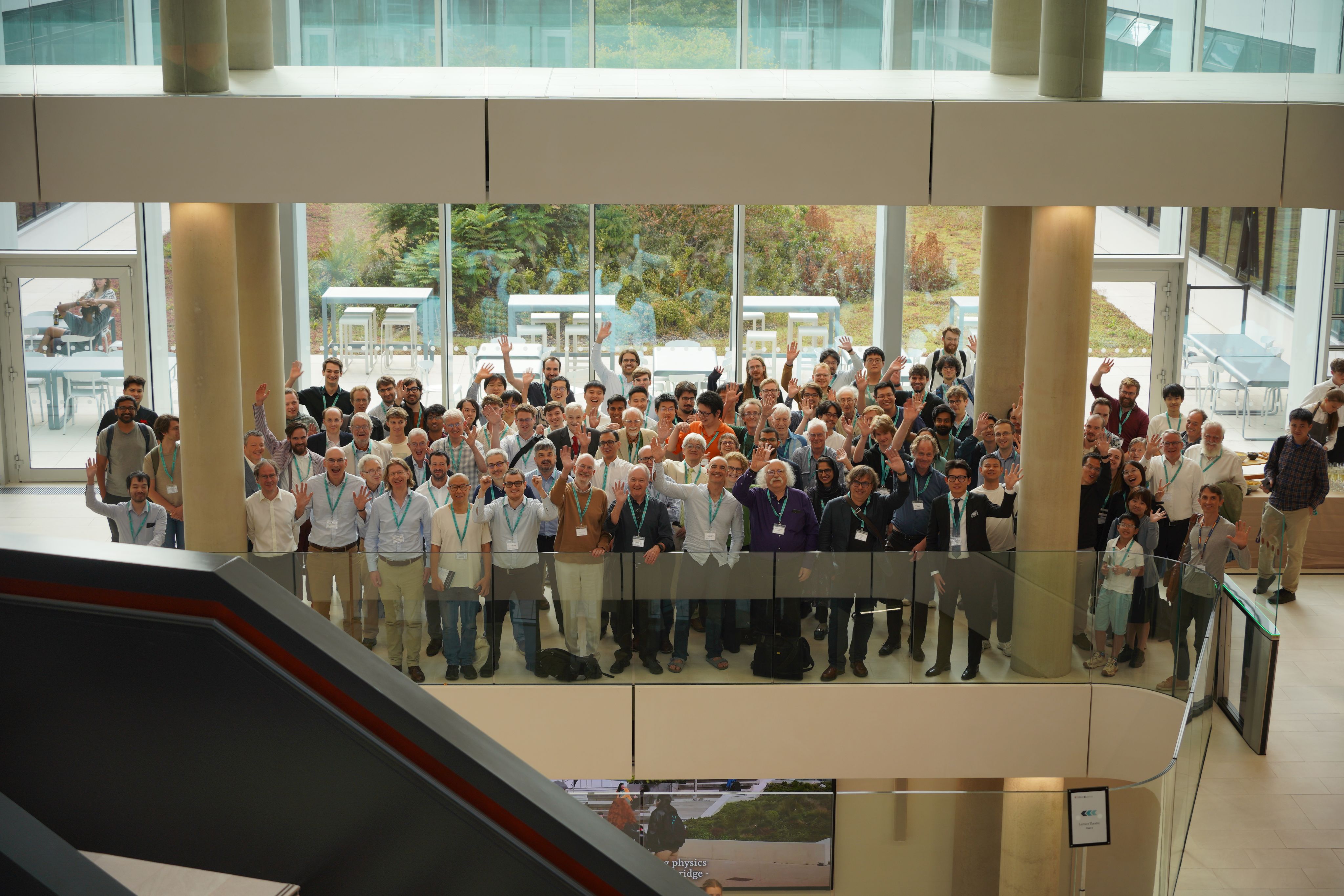
Group photo of all the TCM anniversary attendees at the Ray Dolby Centre. Credit: Vivien Perez.
Group photo of all the TCM anniversary attendees at the Ray Dolby Centre. Credit: Vivien Perez.
Celebrating 70 Years of Theory of Condensed Matter
On 25 July, the Cavendish Laboratory was delighted to welcome back alumni, colleagues, and friends for a special event marking the 70th anniversary of the Theory of Condensed Matter (TCM) group for a day filled with science,
stories, and celebration.
It was truly heartening to see so many members of the TCM community, past and present, come together to honour the legacy and spirit of a group that has shaped generations of physicists. The programme of talks captured not just the scientific brilliance of the group, but also its enduring sense of
support, family, and belonging.
Highlights included an inspiring talk by Nobel Laureate Duncan Haldane, who took the audience on a journey and deep understanding of the development of topological concepts in condensed matter physics. Chris Smith reflected on his own path, sharing how the skills and resilience he developed during his PhD at TCM laid the foundation for a very successful career in machine learning and artificial intelligence.
A landmark move for Physics
Our cryogenics facility was the last piece of equipment to be moved into the Ray Dolby Centre (RDC) last October, marking officially the end of our move to our new home.
Over 11 months and 14 phases, this monumental project saw the relocation of 31 research teams, two specialist workshops, 47 cryostats - each transported vertically, 98 optical tables - many of them moved fully loaded with active research setups, countless pieces of sensitive research equipment including several precision microscopy suites, the Cavendish Museum collections and its vintage cases, and finally the Cryogenics facility.

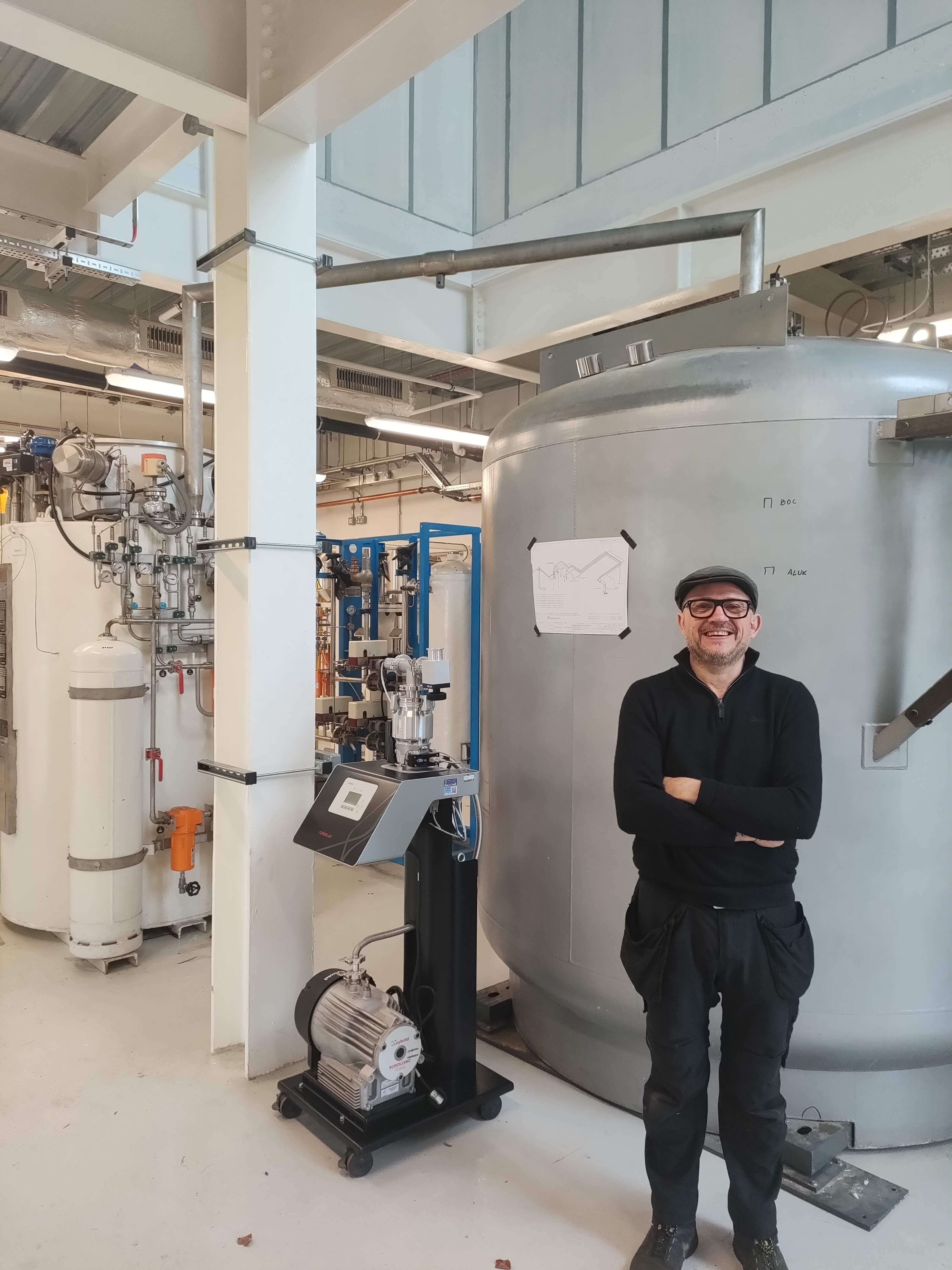
Dan Cross in the newly moved cryogenics facility at the Ray Dolby Centre.
Dan Cross in the newly moved cryogenics facility at the Ray Dolby Centre.
This complex operation took not only logistical expertise, but also plenty of creativity and bespoke solutions to safely move highly sensitive research equipment. None of this would have been possible without the dedication of our partners Restore Harrow Green and MovePlan.
A huge thank you to our research groups, professional services, Move Champions, and all our staff, for their efforts, resilience and flexibility, which have made this landmark relocation a true team success. We extend our heartfelt thanks and gratitude to the members of the Logistics Committee members and to the small RDC Project Team. Their dedication and tireless commitment over many years have been instrumental in making this wonderful new addition to the Cavendish Estate possible.

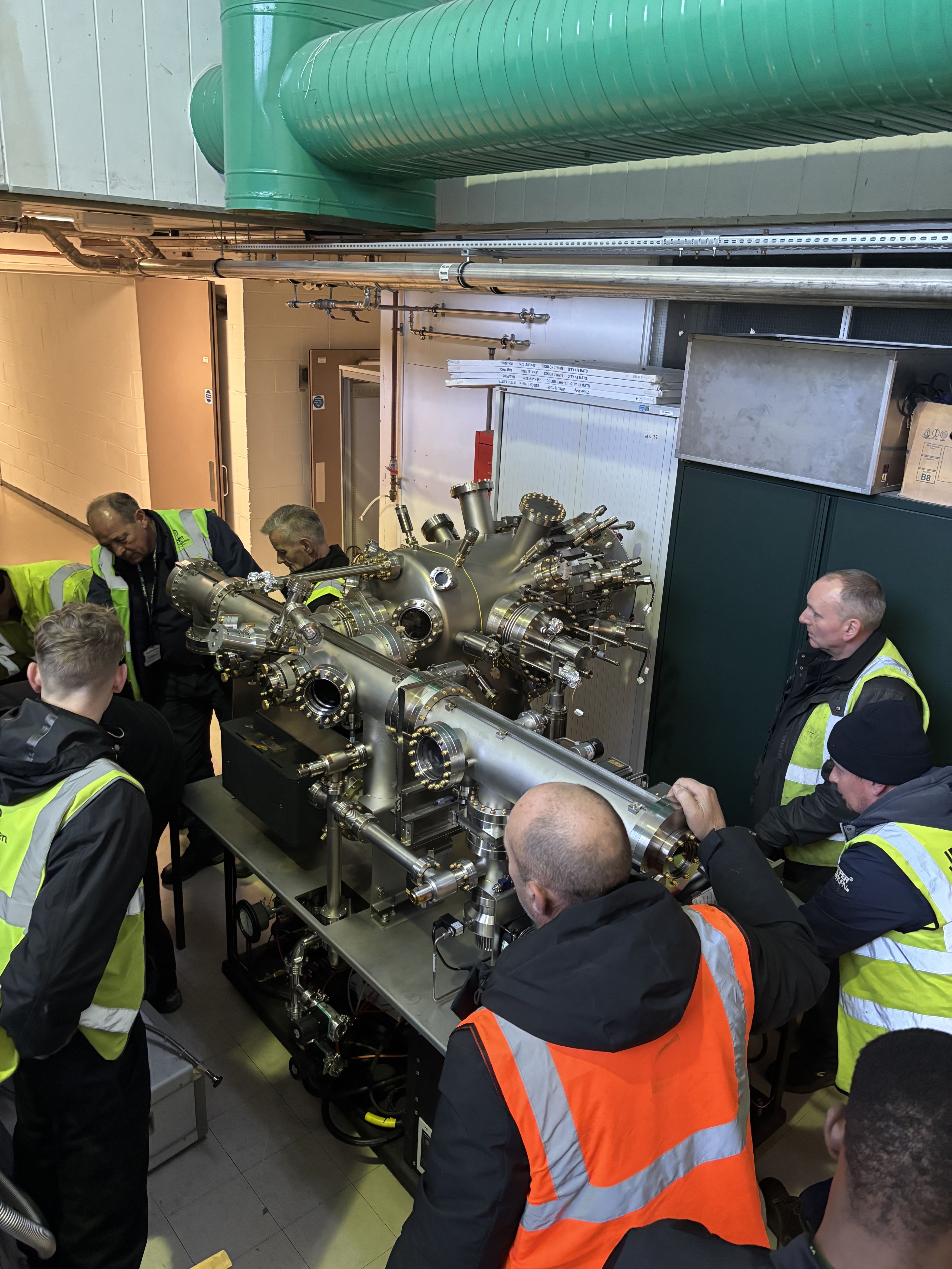
Gen 2 moving day to the RDC cleanroom in January 2025.
Gen 2 moving day to the RDC cleanroom in January 2025.
Save the date for the Dolby Symposium
The inaugural Cavendish Science Festival last June was a resounding success. We are pleased to announce that the event will return in 2026 with a refreshed format and under a new name.
The Dolby Symposium will consist of one day of talks and panel discussions focused on a single, unifying theme, designed to foster engaging dialogue and provide fresh insights on the topic.
Don’t forget to mark your calendar for Thursday 18 June 2026 in Cambridge, at the Ray Dolby Centre.
We will announce the theme and more details about the programme, speakers, and how to register in due course.
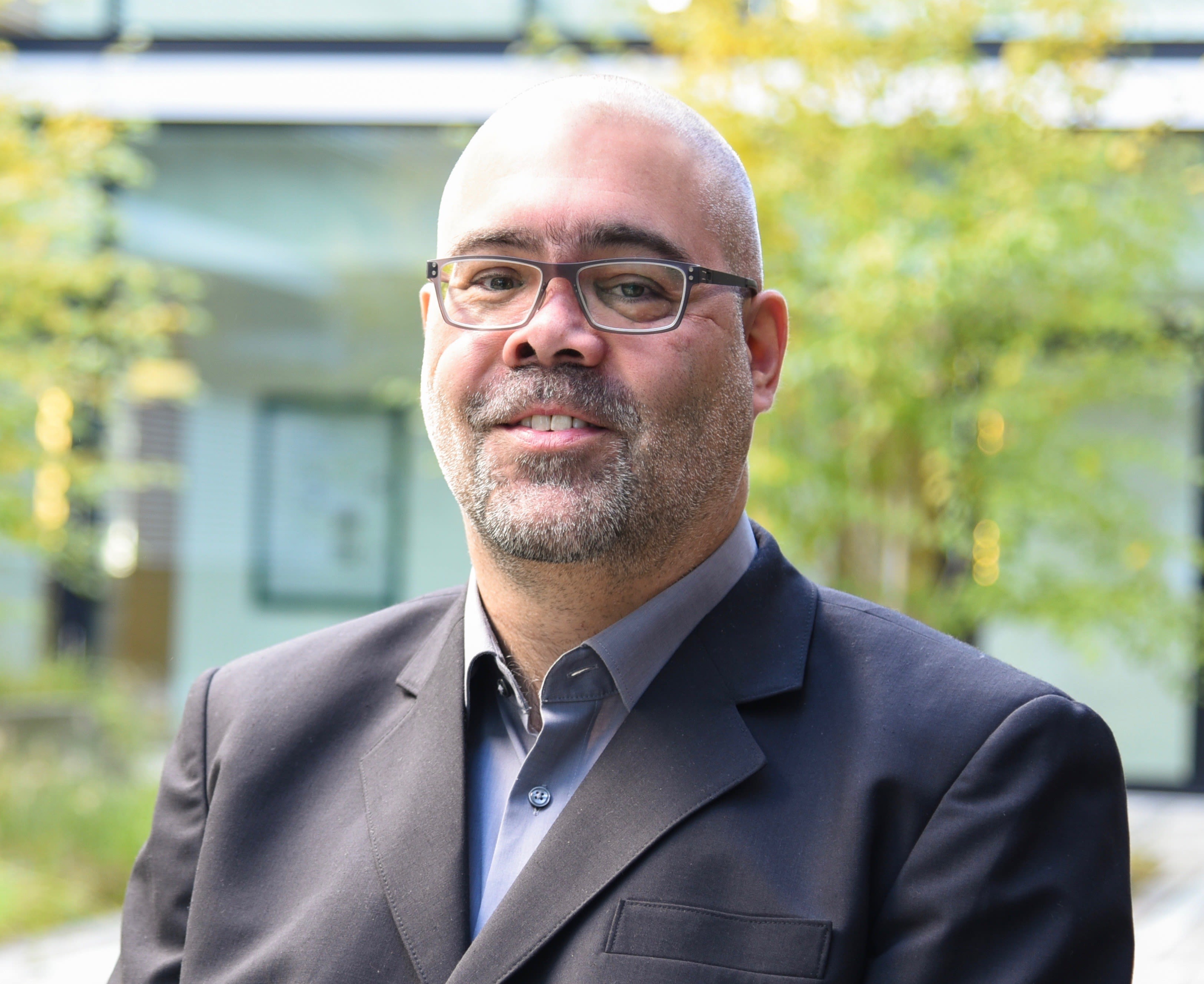
Jochen Guck
Jochen Guck
Jochen Guck (1973 – 2025)
former Reader in Biophysics at the Cavendish Laboratory. An expert in optics and imaging, Jochen’s pioneering work advanced understanding of cell mechanics and the physics of life. He was a great contributor to our Department. He played a key role in designing the Physics of Medicine laboratories and inspiring a generation of scientists through his teaching, research, and contagious enthusiasm for discovery.
He will be deeply missed by his former colleagues and friends here at the Cavendish, and we send our sincere condolences to his family.
Farewell to…
In October, we bid farewell to Martin Underwood, who has been an integral part of the Cavendish Stores team since October 1999. Over more than two decades, Martin has been a reliable presence, ensuring that the Department’s day-today needs ran smoothly - from supplying everything from stationery and safety equipment to chemicals, glassware and electrical components, to overseeing deliveries and helping colleagues locate that elusive item just when it was needed.
We thank Martin for his dedication and helpfulness and wish him every success and happiness in the years ahead.
Professional services appointments
Neil Baxter – Programme Manager
Ellen Coveney – Course Administrator
Bethany Falconer – HR Administrator
Nicole Robinson – Receptionist
Joeal Subash - Electronics Engineer
Saad Umar – Finance Assistant
Alumni news
Physics fixes all the facts
The idea of emergence is found throughout science. But what if it doesn’t actually explain anything? In his new book “Physics Fixes All the Facts” (Springer Nature, 2025), Cavendish Alumnus Liam Graham (Robinson 1986-89) argues that emergence is an empty concept and explores what this means for our understanding of the physical world and the aspects of it we call life, free will, and consciousness.
Blending philosophy and physics, the book offers a radical perspective on reality, illustrated with plenty of concrete examples. An ideal gift for any scientist and philosopher in search of unexpected ideas, as well as all the individually curious with some scientific background. The book is available from any good bookshop.
Graham is also the author of “Molecular Storms: the Physics of Stars, Cells and the Origin of Life” on popular thermodynamics. He is planning a third one on the physics of cognition.