BRIGHTS future for quantum objects

Richard Friend is one of the leading researchers to win a European Research Council’s (ERC) award in its latest round of Advanced Grant competition, one of the most prestigious and competitive funding schemes in the EU. The funding, worth €2.5 million per grant, gives senior researchers the opportunity to pursue ambitious, curiosity-driven projects that could lead to major scientific breakthroughs.
Friend, a Research Professor at the Cavendish Laboratory, leads a team studying electronic properties of novel semiconductors like carbon-based organic semiconductors and metal halide perovskites.
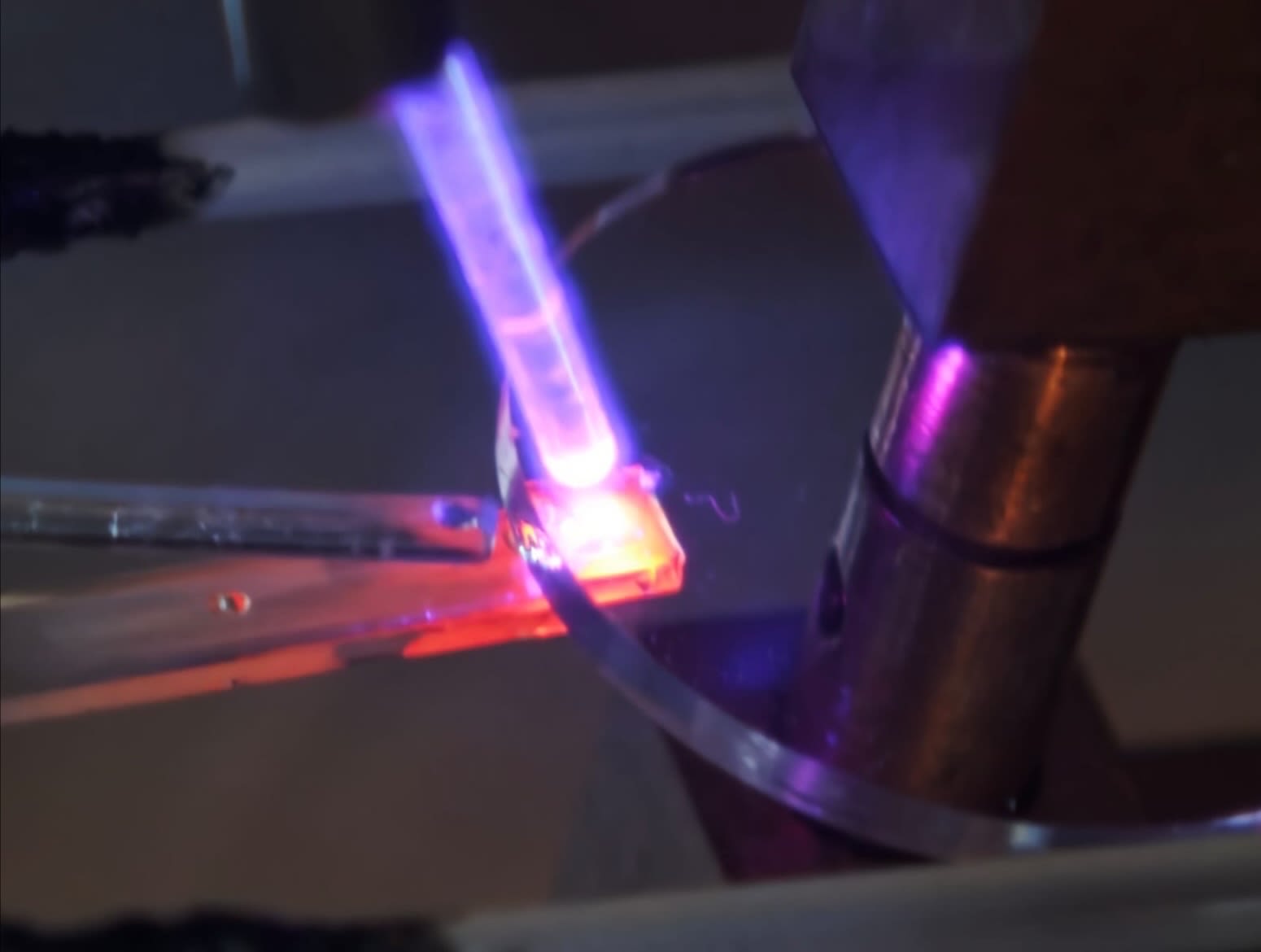
Their new project, named Bright High Spin Molecular Semiconductors (BRIGHTS), builds on Friend’s breakthrough in creating bright materials that operate in higher electronic spin states, potentially revolutionising quantum science and optical tech by combining luminescent and spin properties.
Friend explains that their long-term LED work and unexpected findings led to molecules with high electron spin being extraordinarily luminescent. Understanding the mechanisms allows for designing systems where interactions between spins are controlled.
These breakthroughs enable molecules to support complex spin states while remaining luminescent, creating spin-optical quantum objects. The project aims to develop materials that emit light efficiently and support high-energy spin states for uses like sensors detecting magnetic or biological signals, electronics controlled by spin states, and improved solar cells.
Friend highlights the powerful versatility of manipulated molecular structures to transform light emitters into quantum objects, every atom carefully positioned for specific goals. This research opens opportunities in quantum sensing, data storage, and optical tech with European funding securing these ambitions.
Find out more about Richard Friend’s research at friend.oe.phy.cam.ac.uk